Shop Theft clues

And how will you be paying for that? Key shop theft clues

When it comes to identifying a shoplifter, there is no single type. Shoplifters come from all demographics and may steal for a variety of reasons, whether that’s poverty, an adrenaline rush, or because the opportunity arises.

But according to a recent article in Business Insider, staff are often the first to notice specific behaviors that indicate an offence is about to take place.

Here are the key shop theft clues often noticed by retail staff…

Body language

The way a customer conducts themselves instore is a major indicator as to whether their intentions are genuine or more devious.

The retail staff interviewed by Business Insider note a customer who appears too nervous or overly relaxed is often trying to conceal their real motive for entering a retail outlet.

“Some shoplifters often try ‘harder than normal to blend in’,” one US retail employee said. Other customers might appear more on edge, hurrying through a store without making eye contact with staff.

Head down, no contact

This lack of eye contact is a suspicious sign many retail employees believe raises an immediate red flag.

Often this failure to interact with either staff or other consumers extends right through the shoplifter’s entire visit to a store, seeing them avoid any meaningful contact or conversations with sales associates.

It might be because they feel guilty, are preoccupied with the intended theft at hand or don’t wish to be remembered, but patrons who avoid interaction often indicate something’s amiss.

Assessing the store, not the products within it

When a customer looks around more at the shop than the merchandise, it can also be a key clue a person is scoping the store rather than looking to enjoy the retail experience within it.

They may be seeking clues on security systems in place or assessing their ease of exit. But either way a customer who is looking up and around rather than at the products on offer may not be visiting for entirely legitimate reasons.

Importantly, this potential thief may not be seeking to steal during their initial visit, but might actually be marking a target for future theft.

Oversized clothes and excessive bags

Unseasonal or overly large clothing is often touted as a signal a shopper might be considering concealing merchandise. The anecdotal evidence from retail associates confirms this is a definite clue.

“Customers with ‘baggier clothing’ sometimes stick out, given that sagging garments offer shoplifters more room to hide stolen goods,” Business Insider reflects.

Meanwhile, large bags can also be employed to conceal items, and some are even designed to interfere with older-style Electronic Article Surveillance systems.

A target in mind

Whether it’s electronic accessories, top shelf liquor, or clothing, a shopper who makes a beeline for a specific area of the store could also offer a clue they have something in mind to steal.

Meanwhile, some products and departments of a retail outlet are more prone to theft than others.

“Shoplifters ‘usually go straight to electronics, cosmetics, or clothing’,” one retail employee noted, while another agreed “someone with their ‘head down’ walking straight towards electronics could raise some red flags”.

The regular offender

The biggest clue of all comes in the form of the frequent offender who regularly steals from an outlet and whose suspicious behaviour has previously been noticed by staff.

“We usually know who our thieves are,” one retail employee told Business Insider.

Offenders often visit a location or chain of outlets more than once, especially if they identify flaws in their security and surveillance.

Best prevention strategies

The best loss prevention involves using multiple strategies and having a comprehensive approach to product security.

It includes:

  • Educating staff as to the behaviour of shoplifters and suspicious activity to watch out for
  • Utilising electronic article surveillance like security tags and labels to monitor stock
  • Implementing regular stock takes and RFID inventory tracking to ascertain whether items are stolen and what stock is most at risk
  • Creating good store layout to eliminate hidden areas, and position high value stock/commonly stolen items within view of staff
  • Offering good customer service
  • CCTV monitoring
  • Using tethered cables, lockable displays and cabinet locks for high-value and frequently stolen items

You can learn more about selecting the right EAS security options like security tags and labels for your retail environment, or contact our friendly staff for further advice.

Organized retail crime on the NRF Protect Agenda

Organized Retail Crime on the NRF Protect agenda

With Organized Retail Crime (ORC) at an all-time high, the National Retail Federation is set to discuss the issue in depth at their NRF Protect conference, in June this year.

Hosted in Anaheim, California, the conference will shine a spotlight on all areas of retail loss prevention and asset protection, with a focus on cyber and digital crime, risk management, talent and culture, theft and fraud, and workplace violence.

The event is one of the biggest on the annual US loss prevention calendar, featuring 90 speakers on the agenda, with over 2500 visitors attending the three-day event.

And with ORC now costing retailers $777,877 per $1 billion in sales , this year’s event will also see a panel of experts discussing the impacts and best strategies to prevent Organized Retail Crime.

The ORC threat

In November last year the National Retail Federation released their annual report on Organized Retail Crime. They noted nearly three in four US retailers had seen an increase in ORC in the past year, and for over a third of survey participants that increase was “significant”.

Defined by the NRF as “the large-scale theft of retail merchandise with the intent to resell the merchandise for financial gain”, ORC contributes to the growing impact of shoplifting, which US retailers note is their top source of inventory shrink. In total shoplifting accounts for 35.7 per cent of retail loss.

The survey found ORC losses over the past year had risen seven per cent on 2017 to equal $777,877 per $1 billion in sales.

ORC in the news

In the past month alone the implications of ORC have been hitting the headlines. On May 8, the Orlando Sentinel reported six people were arrested in Polk County, suspected of stealing and selling an estimated $2 million worth of retail merchandise from across the state.

“The six are suspected to be responsible for 150 reported thefts in the state from Burlington, CVS, JC Penny, Publix, Walgreens and Winn-Dixie, acting between four and five nights a week and hitting eight to 10 businesses each day, according to the Sheriff’s Office.

The suspects were arrested after the PCSO Organized Retail Crime Unit conducted a large-scale undercover investigation with partners.

Meanwhile on May 17, the Manteca Bulletin reported three Stockton residents were arrested and charged with the felonies of conspiracy and grand theft after a tip-off from a suspicious retailer.

And that’s just the tip of the ORC iceberg, with the crime affecting retailers across the country.

An expert panel

It is incidents like these which an expert panel will discuss at the NRF Protect in a session on June 12 entitled “ORC: Aided and abetted with a little help from my friends”.

The session will feature law enforcement officers along with ORC specialists from the retail sphere.

“The sophistication and brazenness of organized retail thieves pose new challenges to retail investigators trying to track them down,” the NRF Protect agenda notes.

“With ORC rings working multi-state and multi-regional territories, it is imperative for retailers to enlist all the assistance they can, both from other retailers and from local law enforcement agencies.”

NRF Protect runs from June 11 to 13 and will be held at the Anaheim Convention Center.

Protect your eyewear from theft

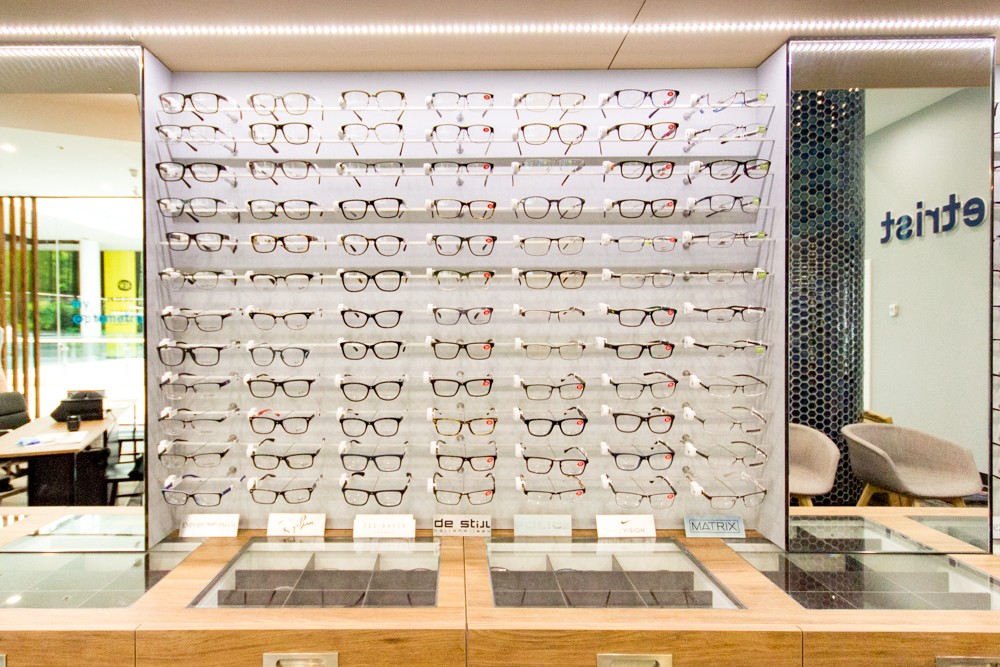
Protecting against eyewear theft

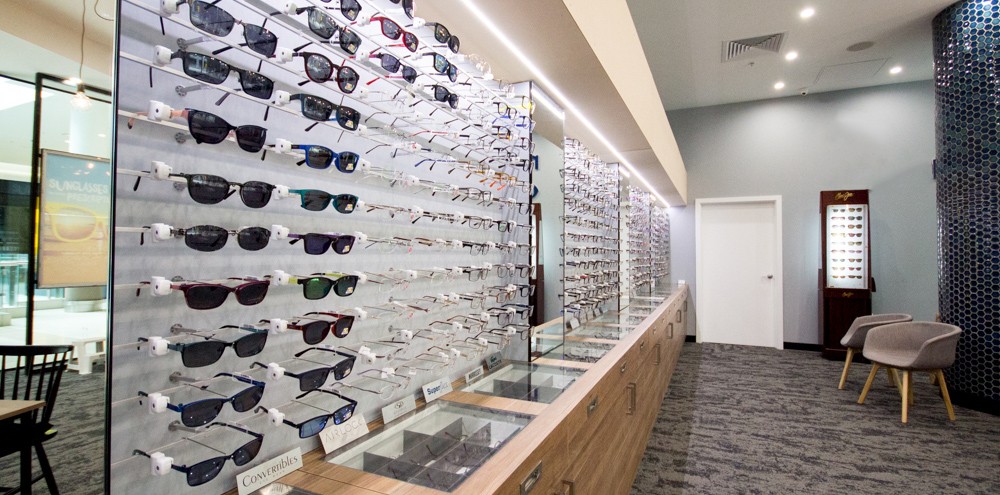
Small, concealable, and often available in desirable designer brands, eyewear and especially sunglasses are a major target of retail theft.

So much so, sunglasses rank as the fourth most commonly stolen item in the apparel and fashion accessories sector, according to the most recent Global Retail Theft Barometer.

So how do retailers protect against eyewear theft?

The eyewear challenge

Eyewear presents a unique challenge in retail. On one hand customers want to quickly and easily try on not just one but many pairs of glasses or sunglasses before making a purchasing decision. That means locking them in a case can be inconvenient for both staff and consumers, impeding a sale and the customer experience.

On the other hand, eyewear is one of the most commonly targeted items for theft. And the value of eyewear varies, ranging from ultra-affordable options to designer brands costing hundreds of dollars.

Meanwhile, the very nature of eyewear design means standard labels and tags may not be sufficient. As any department store or eyewear retailer will attest, it’s not uncommon for shoplifters to simply unhook a swing tag or peel off a label, then pop the sunglasses on their head and simply walk out.

So, what should retailers do?

Eyewear theft prevention strategies

Like any loss prevention strategy, eyewear theft protection relies on a series of techniques that range from good store layout and customer service to product-based electronic article surveillance. So, working from the product-level up, here are the strategies retailers can employ.

EAS and optical tags

While common tags and labels may not be suitable for eyewear, there are specific security tags designed to protect sunglasses and optical products from theft.

These optical tags are purpose-made to ensure the user experience and aesthetic appeal of the eyewear are not impacted, but the item is still guarded against shoplifting.

Protecting against eyewear theft

At Security Tags, our preferred optical tag of choice is Optilock, as it offers the best balance between size and security. Optilock is available in two sizes suited to narrow optical frames and larger fashion frames.

The patented locking method locks tighter to frames and adjusts to frames thickness up to 0.2″ thick, and unlike similar security tags, the Optilock won’t break when over tightened.

Glass cabinets

For fashion retailers with only a limited number of sunglasses, glass cabinets can be a suitable theft prevention method.

But, although lockable cabinets protect items from theft, they can impede the customer experience of trying on items. They can also place an unnecessary burden on staff, who are tasked with locking and unlocking cabinet doors, so a customer can see what suits.

Customer service

The simple act of having a staff member available in the eyewear department goes a long way to reducing incidents of theft. This sales associate is ideally on hand to meet and greet clientele, and guide them through the selection of a product.

Layout and lighting

The basic layout and lighting of a retail also has the potential to decrease the likelihood of eyewear theft. Eyewear accessories should be in full view of the sales counter. Meanwhile, lighting should be bright enough to ensure a potential shoplifter feels too visible to go through with a theft or tamper with its labelling.

CCTV

As with all retail, store surveillance can play an important role in protecting an eyewear outlet or department against shoplifting. Visible surveillance can act as a deterrent to theft and also assist police in catching a previous offender.

The final word

Eyewear might be a small product, but its theft can quickly add up in terms of inconvenience and cost for retailers.

And, like all loss prevention, protecting eyewear products should involve a multi-faceted approach. This strategy starts at a product-based level with optical security tags and extends right through to service and store design.

What 5G means to retail?

What 5G means to retail?

A faster, more efficient era of mobile internet has arrived and with it comes fresh opportunities for physical retail.

Currently rolling out across the US, 5G is set to offer increased speed, less latency and greater bandwidth that will impact everything from the back end of retail operations to the customer experience instore.

Here’s what 5G means to retail…

What is 5G?

5G is the fifth generation of cellular mobile telecommunications, so it’s the type of internet you utilise when using a smart phone. It supersedes 4G, 3G and 2G, offering more data, a faster transfer rate, greater efficiency and less latency.

The upshot is, your mobile internet will be faster and more efficient, and there’ll be more bandwidth available for things like video streaming on-the-go.

Now 5G is steadily rolling out across the US and retailers are investigating the best ways to utilise the new technology.

The in-store experience

5G is predicted to be a major driver of the Internet of Things, allowing more devices to connect to mobile internet with greater efficiency.

As AT&T notes that’s going to better cater to emerging trends in retail that shape a shopper’s experience when they enter a store.

That includes a range of new technologies, like:

  • personalized digital signage
  • magic mirrors
  • augmented reality
  • virtual reality
  • smart shelves
  • video and pattern recognition of shoppers

Stores Magazine recently explained many retailers had sought to introduce this technology, but the heavy toll on bandwidth proved a challenge.

“While the hardware for digital fitting rooms, immersive experiences and interactive displays has long been available, retailers have often struggled with adoption due to the heavy bandwidth required to support these experiences,” they note. “5G could potentially eliminate these limitations.”

Mobile apps

Although mobile apps are nothing new, the speed at which they will be delivered and the seamless experience they will offer is set to transform under the guidance of 5G.

As retailers replace fixed internet with more efficient mobile, consumers will no longer have to overcome the glitch of connecting to a store’s network in order to access the benefits, Stores Magazine further explained.

“Having to log into store networks to access in-store functionality has often been a hiccup in the omnichannel experience,” the magazine notes.

“In a fully optimized 5G environment, customers could seamlessly walk in and out of any store with a high-speed, real-time connection that enables them to engage with the retailer throughout the process.”

What 5G means to retail?

Store operations

From the mobile Point of Sale to RFID tagging, store inventory and logistics, much of the back-end of modern retail depends upon the Cloud.

5G is set to speed up access to the Cloud, reduce the latency involved, and allow more devices to use and access it effectively at the same time.

This means the Cloud will be accessible in real and immediate time, improving everything from the performance of back-end operations to the reliability and immediacy of mobile Point of Sale.

Data and analytics

To create a personalised, customised experience, retailers are increasingly relying on the gathering of data and analytics.

In the recent retail technology study Wake Up Call for Digital Transformation Intel’s Alex Gefrides noted: “In-store analytics are being applied to every phase of the retail process by determining retail trends, predicting where the demand will be for products, optimizing pricing for a competitive edge, identifying consumer purchasing patterns and behaviors, and other insights for immediate decisions”.

5G will better furnish retailers with the ability to do this in real time.

So much to come

As Stores Magazine notes, the ways in which 5G will transform both retail and the wider world is in many ways yet to be fully explored.

“The faster speeds, performance and bandwidth will transform every industry,” they note. “No one can tell you what the world will look like in 10 years, but because of 5G, it will look very different. The same as it’s very different today than it was 10 years ago.”

10 scary retail shrink statistics

10 scary retail shrink statistics

Whether your retail outlet has been targeted by shoplifters or you’re just looking to better understand the playing field, there are a host of facts and figures that indicate just how prevalent retail shrink is in America.

Here’s a quick recap of 10 scary retail shrink statistics in the US…

Loss costs US retailers almost $50 billion annually

The National Retail Federation (NRF) found shoplifting, employee theft, error and fraud cost the industry an astounding $46.8 billion in 2018 alone.

In context, that means shrink sees the industry lose 1.33 per cent in sales.

Most loss is due to shoplifting

In the US, shoplifting and organized retail crime (ORC) are the prime contributors to retail shrink, with the NRF noting 35.7 per cent of loss is due to external theft, outpacing employee theft at 33.2 per cent, administrative error at 18.8 per cent, unknown loss at 6.6 per cent and vendor fraud or error at 5.8 per cent.

External theft has been the primary source of retail loss for the past four years in a row.

The average incident cost has almost doubled

The average cost of a shoplifting incident has almost doubled to $559 since 2015.

Shrink is costing retailers more

In 2018, 20 per cent of NRF survey of respondents reported shrink at 2 per cent of sales or more. That is up from only 17.1 per cent reporting a shrink rate above 2 per cent in 2015.

1 in 11 Americans shoplift

Past figures from the National Association of Shoplifting Prevention indicate one in 11 Americans shoplift. In cold hard numbers, that means 27 million Americans are shoplifters, while 10 million have been caught in the act at some point in the past five years.

There are three types of shoplifters

Researchers commonly break shoplifters down into three distinct categories:

  • The professional – This shoplifter steals for economic gain as part of a group or individually.
  • The amateur – This shoplifter steals for the “rush”, at the behest of friends or out of simple necessity.
  • The opportunist – This type of shoplifter rarely enters a retail environment intending to steal, but rather takes items because security is lacking, or the opportunity is available.

A repeat offence

A FaceFirst study found 60 per cent of known shoplifters enter at least two separate locations of the same retail chain, while 20 per cent visit three or more locations.

Shoplifters steal for a variety of reasons

Shoplifters steal for both rational and non-rational reasons, with researchers noting they usually steal due to one of five factors:

  • Socio-economic disadvantage
  • To fund drug use/addiction
  • Thrill seeking
  • Kleptomania
  • Absent mindedness

Footwear is a frequent target

Looking across the verticals at what thieves are most likely to target, the most recent Global Retail Theft Barometer indicates the most commonly shoplifted items in America are:

  • The apparel sector – footwear
  • In DIY/home improvement – power tools
  • In electronics – mobile devices and accessories
  • In food and beverages – wine and liquor
  • In health and beauty – fragrances and perfumes

When people shoplift

In the US winter is prime shoplifting season, along with sales periods. Much of that theft is driven by the festive season, with 81 per cent of winter losses occurring during holidays/festivities.

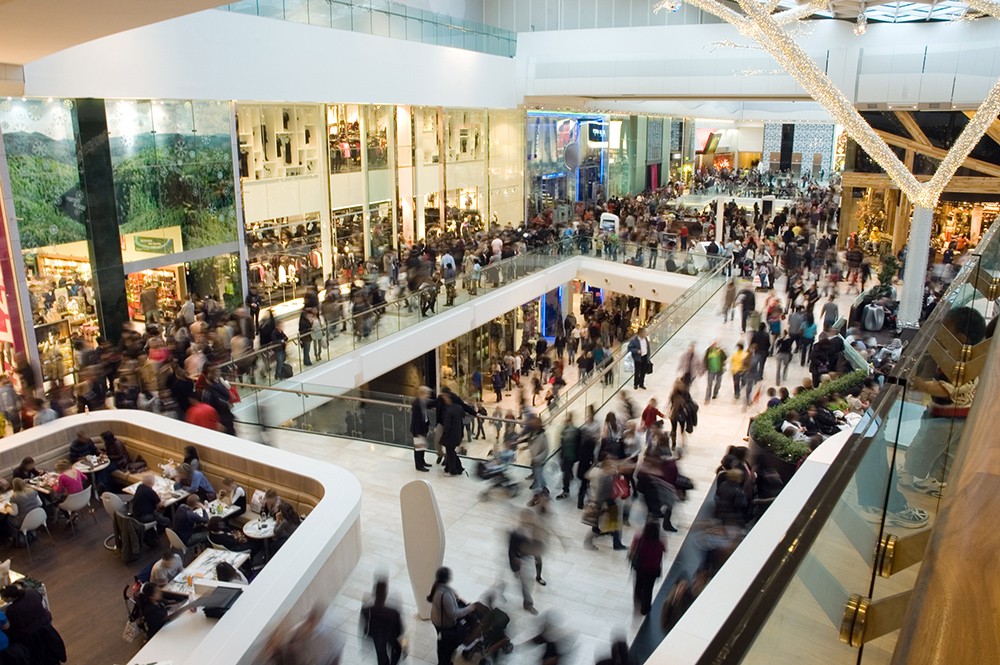
This shrinkage is prompted by increased foot traffic throughout stores, making it harder to track and detect theft, and is then further complicated by casual employees, who often have less training in store protocols and shoplifting detection.

Looking to combat theft?

You can learn more about the tools and strategies to combat shoplifting here, or speak with our friendly staff about implementing effective EAS solutions like security tags and labels.

Physical Retail

Smart phones prove to be the essential retail assistant

The large majority of US consumers still prefer to shop at a physical retail location, but often they’re using the smart phone to assist.

These are the findings of a recent survey conducted by RetailMeNot, who note 85 per cent of Americans shop in a non-grocery physical retail store during a typical week, and on average, they visit up to three stores.

Here’s a further insight into their survey results…

Physical retail far from dead

RetailMeNot’s findings illustrate just how important physical retail continues to be in everyday American’s lives. In addition to 85 per cent of all shoppers visiting up to three non-grocery outlets each week, that number increases in younger generations.

The survey found millennials stop in at four physical locations a week while Gen Z visits on average 5.25.

While that’s great news for real-world retail, what is changing is the role that technology plays in that shopping journey.

The mobile retail assistant

Chances are, if you’re shopping, you’re doing it with a mobile phone in hand, and you’re using it to assist in your decision making.

The survey noted a mobile device is the number one retail companion and people use it to seek out reviews, price match, and source offers and deals, often in preference of dealing with a retail associate.

They found:

  • Most in-store shoppers (69 per cent) would rather consult a product review on their phone than ask a store associate.
  • More than half (53 per cent) would rather use a mobile device to find deals and offers on products they are considering purchasing than discuss promotions with an in-store associate.

Meanwhile, that mobile device is also being employed to seek out the best deals, and consumers are more than happy to embrace a retail app if it offers them this service.

  • Nearly half (49 per cent) of Americans have an app that collects and provides deals and discounts across retailers on their smartphones.
  • 65 per cent of Americans say receiving mobile coupons they can redeem in-store is important when shopping in physical stores.
  • Even more significantly, 69 per cent say receiving a personalized offer on their phone that they can use in-store would make them more likely to visit a physical retail location.

“In-store retail is still the most important channel for consumers, and the role that mobile plays in the shopping journey is notable to retailers who want to reach in-store shoppers,” CEO of RetailMeNot, said Marissa Tarleton said.

“The mobile device is the number one in-store shopping companion, which is a marketing opportunity for retailers to drive in-store footfall, incentivize sales and understand online-to-offline behavior.”

The journey starts long before the retail outlet

Physical Retail

RetailMeNot noted 65 per cent of shoppers complete their retail journey in-store, but that’s not necessarily where it starts. Over a third (39 per cent) start their purchasing mission on a smart phone, while 14 begin on a desktop.

Of those who start with a smart phone, 38 per cent then go on to complete the purchase in-store, while 43 per cent who begin on a desktop go on to buy at a physical location.

“Mobile browsing and research are standard for most shoppers, and a substantial number of consumers are comfortable converting on either that same smartphone device or in a physical store, based on what is convenient to their needs at the time of their journey,” Ms Tarleton said.

Meanwhile, Americans are 30 per cent more likely to complete a purchase in person than on their smartphone when they find a deal on their phone.

So, what’s the takeaway for retailers?

Omnichannel is essential

Bricks and mortar may continue to reign supreme but there’s no doubting the importance technology plays in the purchasing journey.

Using it to best effect involves:

  • Ensuring retailers have a digital presence including a desktop site and mobile optimised option
  • Facilitating the customer’s desires for online reviews through social media, and online testimonials
  • Personalised product deals and offers, based on a consumer’s previous shopping habits
  • Mobile apps that harness push notifications and product deals when a customer is in-store

How to protect your new store using EAS

How to protect your new store using EAS

The shop fit out is complete, the stock on order and the Point of Sale in place…but what about the electronic article surveillance (EAS) that will guard your store against theft?

Make no mistake, once you flip that door sign to open, it’s not just authentic customers who will be excitedly perusing your wares, and EAS remains the most effective way of protecting individual products against shoplifting.

In this guide, we walk you through the top things to take into consideration to protect your new store using EAS.

Why EAS?

There are a number of ways to protect a retail outlet, and often the best loss prevention comes down to employing not just one strategy but a few simultaneously.

However, at a product-based level, EAS is the most widely utilized and effective tool to protect individual items against shoplifting.

Used by 73 per cent of retailers globally and reducing theft by an estimated 60-80 per cent, it sees each individual product monitored by tags or labels that communicate with surveillance antenna at the entryway to the store.

So, what do you need to consider when implementing EAS?

Types of EAS systems

There are two widely used types of EAS systems available, with the difference being the frequency at which they operate. Known as Radio Frequency (RF) or Acousto Magnetic (AM) systems, the differences between the two are as follows:

RF systems – The price of RF systems can range from very low cost for more basic RF systems through to high cost for advanced RF systems. RF offers the potential to upgrade to RFID with some RF antenna systems, and it’s available from a host of manufacturers.

On the downside, RF can offer a limited range of detection systems often restricted to pedestals, and the systems can be more susceptible to electronic and metallic interference.

AM systems – AM systems tend to offer a larger detection area, so antenna can be positioned further apart. This is ideal in retail scenarios where the entrance to the store is wide. These antennas can also be concealed in door structures or under the flooring. Meanwhile, AM is less susceptible to interference.

On the downside, the cost is often higher than RF, and antenna are not as easily upgraded to RFID.

You can learn more about the difference between RF and AM here, but once you have selected an antenna system, it’s time to consider the tags or labels you will use to protect your products.

Security tags and security labels

How to protect your new store using EAS

Hard security tags and security labels for both RF and AM systems come in a range of sizes and strengths with some incorporating additional benefit denial features like ink dye to make products less attractive to thieves.

Here are the major examples of the different types of products, the tag or label type generally used to secure them, and the factors you need to consider:

Clothing – Clothing is generally secured using hard tags which are available in a variety of strengths, shapes and with different operating mechanisms, and each of these factors adds up to improve the security of your items.

In today’s highly savvy shoplifting era, retailers need to arm themselves with security tags that cannot be defeated by detachers readily available online.

At a minimum, retailers should ensure their security tags include a large pin head and have either Hyperlock or Multipolar tag locking mechanisms that require special and hard to source detachers to unlock.

Fashion accessories – When it comes to fashion accessories such as handbags and shoes, they are most often secured using a cable tag or lanyard, rather than having a pin head pass through the actual product. Lanyards should incorporate high-strength cables that cannot be cut readily or pulled off by a thief. Meanwhile sunglasses can be guarded using purpose-designed optical tags.

Electronics – Due to their high resale value, electronics are one of the most frequently targeted items for theft. If on accessible display, electronics are usually secured to a stand complete with alarm, charger and lockable cable.

Electronic accessories – The accessories that accompany electronics are also some of the most frequently stolen items, but there are a host of ways to secure them. These include display hooks, multi-function tags, and stop locks.

Bottles – Whether it’s top-shelf liquor, or a rare bottle of red, there is a range of tags designed specifically for alcohol bottles, with straps, caps and secure locks available.

Small items – For small items like groceries or hardware, adhesive security labels are the best option due to their affordability and disposability, but you will need to factor in whether flat paper thin labels are preferred or small two dimensional labels.

It’s worth noting that pharmaceuticals often have a high foil content, so AM based systems are better suited to their security.

Detachers and deactivators

All tags require detaching and all labels require deactivation in order for a product to exit the store without setting off an alarm. Security tag detachers are often specific to the make or strength of tag your store utilizes.

Meanwhile, detachers are highly desirable items for any would-be thief so should be adequately secured at the point of sale, while still being readily and conveniently available to staff.

You can learn more about how EAS works and why it’s the preferred method of shoplifting prevention here.

Retail Theft could affect more than the bottom line

Retail theft affects more than the bottom line

It’s a well-publicized fact that shoplifting costs US retailers dearly, but it’s not just in terms of lost revenue. Theft also affects the reputation of an outlet, the safety of staff, the availability of products, and the customer experience.

Together these can have hidden ramifications that go far beyond the financial losses outlined on your annual profit and loss.

Here’s an insight into the hidden ways theft really impacts retailers, and how shoplifting affects far more than just the bottom line.

Pure cost

In cold hard numbers shoplifting in America contributes to almost $50 billion in shrink each year. In 2017 alone it set the retail sector back $46.8 billion, according to the National Retail Federation and that total shows no sign of reducing anytime soon.

In the meantime, theft protection also costs retailers in terms of outlay, with the price of loss prevention strategies adding a further $44.90 billion to the bill.

But when you really weigh it up, shoplifting costs the sector a whole lot more in terms of time, productivity, reputation and safety.

Safety

A retail environment that is prone to theft presents problems in terms of both staff and customer safety. It becomes a dangerous environment to work in or frequent and this is especially the case in retail environments where theft may be accompanied by violence.

As every business owner has a duty of care for their staff, it is in the retailer’s interest to protect both their outlet and the employees they hire by mitigating the risk of theft.

Meanwhile, shoplifters are quick to ascertain which stores offer a viable target and tend to return to them time and again if the right loss prevention strategies are not implemented.

The customer experience

Retail Theft affects more than the bottom line

Shoplifting impacts the customer experience in a host of ways. As mentioned above, it may present a safety problem, but it can also result in increased prices being passed onto the consumer to mitigate the cost of theft.

Meanwhile, one of the prime ways shoplifting impacts the customer experience is through out of stock events where the retailer mistakenly believes an item is available only to find it isn’t due to loss or theft.

Out of stocks not only impact the customer’s immediate experience in store but also affect whether or not they are likely to return to that outlet.

Brand reputation

Together, all the factors above can have an overarching impact on a brand’s reputation and the cost of that can be hard to define.

If a customer does not feel safe, feels they are paying too much or finds the item they believe will be available is not, the overall perception of that retailer is likely to suffer in the long term.

Prevention is better than a cure

When it comes to addressing shoplifting, prevention is always better than any cure. Retailers should be visibly indicating to any potential thieves that a retail outlet is protected.

That said, the balance between loss prevention and a welcoming retail environment is a fine line to tread. And doing so involves implementing the right theft prevention strategy in the right place.

Key strategies for addressing shoplifting include:

  • Staff training, including training in meeting and greeting customers, and how to identify shoplifters
  • Good store layout which offers visibility to all areas of the outlet and sufficient lighting
  • Electronic article surveillance, using hard tags and security labels at a product level to deter shoplifters and protect items from theft.
  • Benefit denial strategies like ink tags, which work as a deterrent to shoplifters.
  • CCTV to monitor the entire retail environment
  • Lockable cabinets and display cases
  • Store security guards

You can lean more about the prime loss prevention strategies here, and for more guidance on balancing stock protection and the customer experience see here.